Why now: Canada faces rising global demand for secure, responsibly produced energy, requiring new large‑scale infrastructure across pipelines, transmission, LNG, and carbon management.
Core questions: Which projects are strategically essential for national competitiveness? How do we accelerate timelines while ensuring environmental and community confidence?
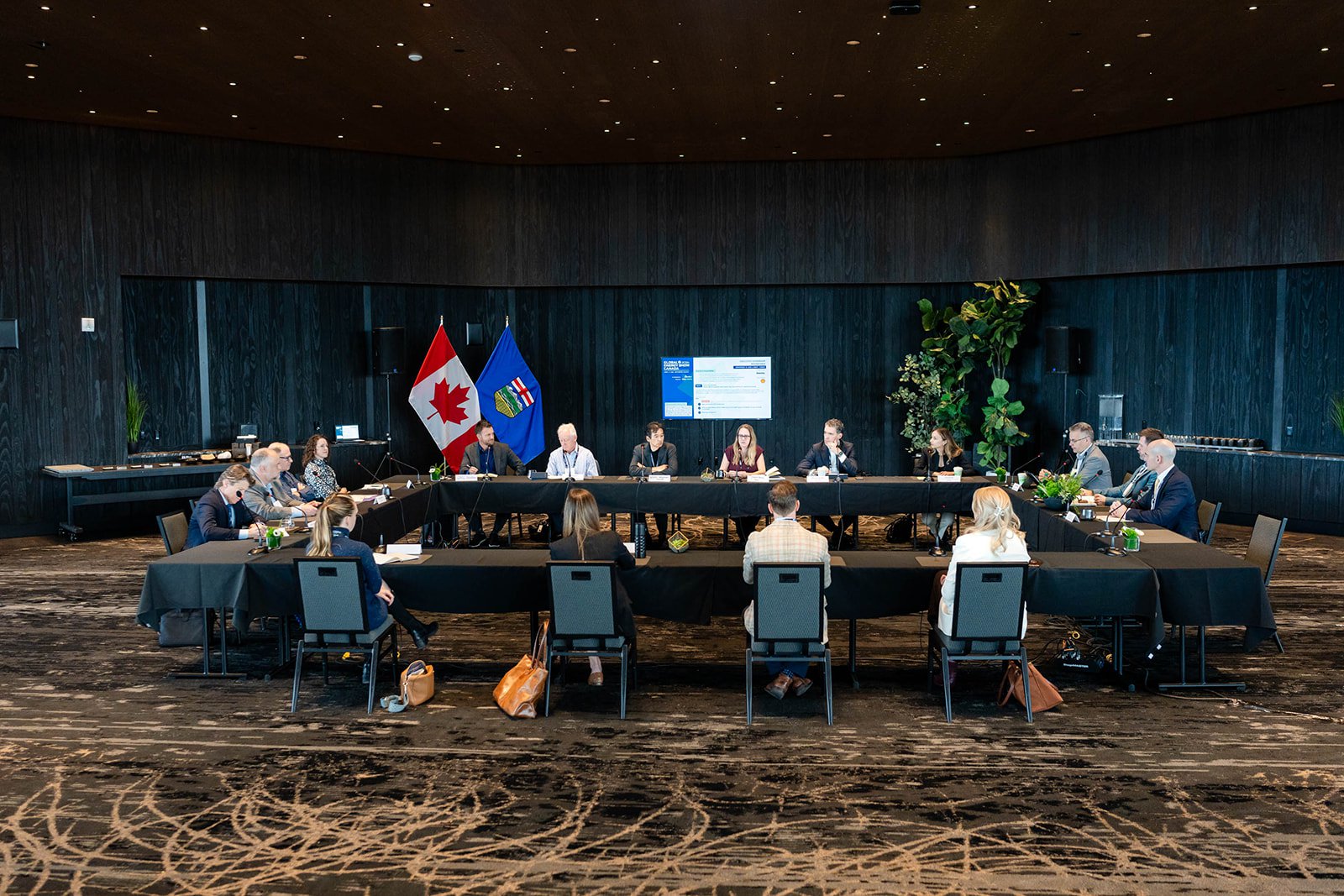
Who’s in the room: Project developers, regulators, Indigenous equity partners, EPCs, financiers.
Why now: Long permitting timelines remain a top barrier to investment in energy, mining, and industrial projects. Recent federal–provincial agreements, including the Canada–Alberta MOU, signal momentum toward faster, more predictable approvals.
Core questions: What reforms can reduce timelines by 30–50%? How do we align environmental integrity with economic urgency?
Who’s in the room: Federal/provincial permitting authorities, CER leadership, Indigenous governments, industry associations.
Why now: Global markets are seeking secure, low‑carbon supply, and Canada’s ability to deliver depends on modern pipeline and CO₂ transport networks.
Core questions: What new corridors are needed for oil, LNG, hydrogen, and CO₂? How do Indigenous ownership, emissions performance, and capital discipline shape the next generation of projects?
Who’s in the room: Pipeline operators, Indigenous project owners, regulators, shippers, global buyers.
Why now: CCUS is central to Canada’s industrial competitiveness and emissions strategy. The Canada–Alberta MOU highlighted the importance of enabling large‑scale carbon storage and transport systems.
Core questions: What financial tools unlock final investment decisions? How do we build a national CO₂ transport and storage backbone?
Who’s in the room: CCUS developers, industrial emitters, finance ministries, municipalities, NGOs.
Why now: Electrification, AI, LNG, hydrogen, and industrial growth are driving unprecedented load increases across Canada.
Core questions: What mix of gas with CCS, nuclear, storage, and renewables ensures reliability and affordability? How do we plan for multi‑GW expansions by 2035?
Who’s in the room: Utilities, system operators, IPPs, large loads, technology providers.
Why now: Provinces are advancing SMR deployment strategies to meet rising electricity demand, decarbonize heavy industry, and strengthen energy security. Canada is positioned as a global leader in SMR technology and supply chains.
Core questions: What policy, regulatory, and financing frameworks are required to move from demonstration to commercial fleets? How do we build domestic supply chains and workforce capacity?
Who’s in the room: Nuclear operators, SMR developers, CNSC leadership, provincial utilities, industrial off‑takers, financiers.
Why now: Canada’s first LNG exports have begun, and global buyers are seeking long‑term, low‑carbon supply from stable jurisdictions.
Core questions: How do we scale LNG capacity while meeting emissions expectations? What are the opportunities in Asia, Europe, and emerging markets?
Who’s in the room: LNG proponents, pipeline operators, Indigenous equity partners, Asian/European buyers.
Why now: Indigenous equity and governance are now essential to the success of energy, mining, and infrastructure projects across Canada.
Core questions: What equity structures deliver long‑term value? How do we ensure early‑stage capacity funding and shared decision‑making?
Who’s in the room: Indigenous rights holders, development corporations, lenders, project sponsors.
Why now: Newfoundland & Labrador and Nova Scotia are advancing major offshore wind, hydrogen, and oil & gas opportunities, positioning Atlantic Canada as a future export hub for Europe and global markets.
Core questions: What infrastructure, regulatory, and investment frameworks are needed to scale offshore wind and hydrogen? How do we build export corridors and global partnerships?
Who’s in the room: Offshore wind developers, hydrogen producers, provincial governments, port authorities, European buyers, regulators.
Why now: Canada must scale mining, refining, and processing for copper, nickel, uranium, and rare earths to support EVs, nuclear, and grid infrastructure.
Core questions: Which projects are strategically essential? How do we build midstream capacity before 2030?
Who’s in the room: NRCan, provincial mines ministries, Indigenous development corporations, OEMs, financiers.
Why now: Canada’s clean‑power advantage is attracting hyperscalers and energy‑intensive industries, but siting, tariffs, and reliability remain key challenges.
Core questions: What frameworks balance industrial attraction with ratepayer fairness? How do we create “power‑ready” zones and integrate heat recovery?
Who’s in the room: Utilities, municipalities, hyperscalers, regulators, industrial developers.
Why now: Global investors are reallocating capital toward low‑carbon fuels, critical minerals, CCUS, and clean power — and Canada must compete aggressively.
Core questions: What conditions attract global capital? How do policy certainty, Indigenous partnership, and infrastructure readiness shape investment decisions?
Who’s in the room: Global investors, sovereign wealth funds, pension funds, project developers, investment agencies.
DMG Events has been informed that several exhibitors are receiving scam emails. Please be aware these offers are fraudulent. These scammers do not have any relationship with DMG Events. In accordance with GDPR, CASL and other jurisdictional data privacy regulations, DMG Events will never sell your data to any third-party organizations. Please see our Privacy Policy for more information regarding how DMG Events will process and store your information.